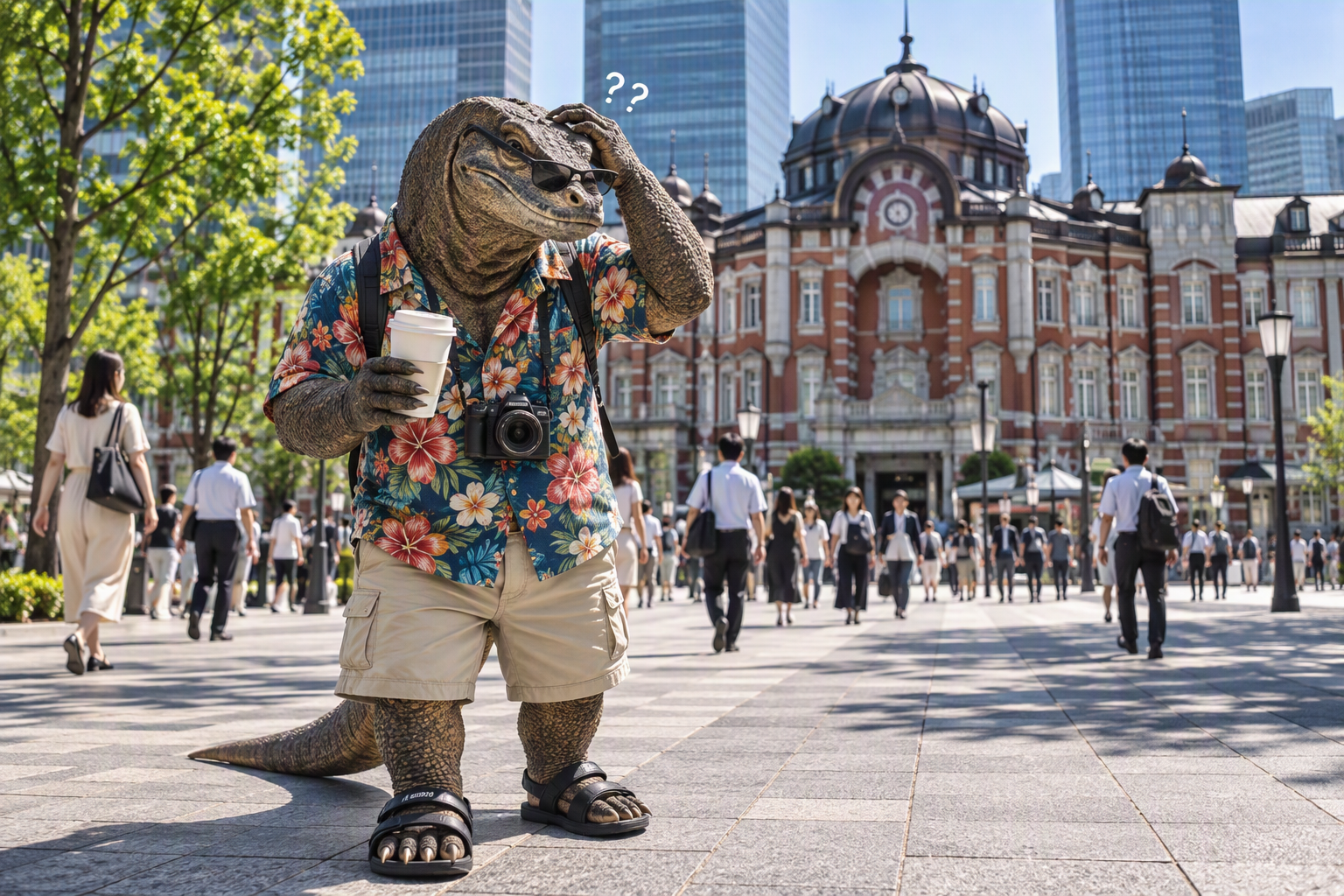
Visitors to Japan often complain about the lack of public trash cans. I looked into how they disappeared, and why the streets never became as dirty as many feared.
Looking for a Trash Can in Tokyo
If you’ve spent time walking around Tokyo, you’ve probably experienced this.
You finish a coffee, a bottled drink, or a snack, and suddenly realize you have nowhere to throw the trash away.
This isn’t just a problem for foreign visitors. Even many Japanese people occasionally find themselves holding an empty bottle or takeaway cup while searching for a trash can.
According to a survey conducted by the Japan Tourism Agency, the lack of trash cans is the most commonly reported inconvenience among international visitors to Japan.
That made me curious.
Why are there so few public trash cans in Japan?
And if they are so difficult to find, why do Japanese cities still appear relatively clean?
What Visitors Struggle With Most
The Japan Tourism Agency regularly surveys foreign tourists about challenges they faced during their trip.
In the latest survey, “lack of trash cans” ranked first. [mlit.go.jp]
| Rank | Challenge | Percentage |
|---|---|---|
| 1 | Lack of trash cans | 17.2% |
| 2 | Communication with staff | 15.4% |
| 3 | Crowding at tourist destinations | 12.9% |
| 4 | Using public transportation | 11.3% |
| 5 | Lack of multilingual information | 10.9% |
| 6 | Credit/debit card usage | 10.7% |
Source: Japan Tourism Agency [mlit.go.jp]
What’s interesting is that the lack of trash cans ranked above language barriers and public transportation.
For many visitors, finding a place to throw something away is a bigger challenge than navigating Japan’s railway network.
So What Happened to Japan’s Trash Cans?
Many people point to one event: the 1995 Tokyo subway sarin gas attack.
They are not wrong.
After the attack, trash cans were removed from many stations and public facilities as a security measure.
But the story is more complicated than that.
The disappearance of public trash cans happened gradually over several decades.
A Brief Timeline
| Year | Event |
|---|---|
| 1995 | Tokyo subway sarin gas attack |
| 2004 | Madrid train bombings |
| 2000s onward | Increased anti-terrorism measures |
| Around 2020 | Hygiene concerns during the COVID-19 pandemic |
After the sarin attack, many operators became more cautious about potential security risks.
Later, overseas terrorist attacks targeting public transportation systems reinforced those concerns. [asahi.com], [mlit.go.jp]
More recently, railway companies have also cited issues such as:
- Suspicious objects
- Household garbage being brought to stations
- Cleaning and sorting costs
- Hygiene concerns related to discarded masks
In other words, Japan’s trash cans didn’t disappear because of a single event. Their decline was the result of multiple decisions made over many years.
It Wasn’t a National Decision
One thing surprised me during my research.
Japan’s national government never simply ordered all trash cans to be removed.
The Ministry of Land, Infrastructure, Transport and Tourism developed railway security guidelines and anti-terrorism measures, but decisions about trash cans were largely left to individual operators and facility managers.
That means:
- Railway companies made their own decisions.
- Municipalities made their own decisions.
- Shopping centers and other facilities made their own decisions.
The result was not one sweeping policy, but thousands of individual decisions that gradually shaped the urban landscape visitors see today.
Why Didn’t the Streets Fill With Trash?
This is where the story becomes interesting.
If public trash cans disappeared, shouldn’t litter have increased dramatically?
Many people worried that it would.
Of course, Japan is not litter-free.
Illegal dumping and improper waste disposal still exist and remain environmental concerns.
Yet most visitors continue to describe Japanese cities as relatively clean.
So what happened?
The People Who Don’t Litter, and the People Who Clean
A common explanation is:
“Japanese people simply have good manners.”
That may be part of the answer.
But I don’t think it explains everything.
In Japan, it is common to see people:
- Sweeping in front of their homes
- Cleaning the sidewalk in front of their shops
- Clearing fallen leaves
- Shoveling snow in front of their property in winter
These activities are not always legally required.
They are often simply part of everyday life.
At the same time, public spaces are actively maintained by various organizations.
Railway stations are managed by railway companies.
Parks are maintained by municipalities.
Commercial areas are maintained by building owners and management companies.
Clean streets are not created by residents alone. They are also the result of constant maintenance.
What Trash Cans Reveal About Japan
While researching this topic, I came to a simple conclusion.
Japan’s relatively clean streets are probably not the result of any single factor.
Instead, they seem to be supported by several things working together:
- People often carry their trash until they find a proper place to dispose of it.
- Facility operators continuously clean and maintain public spaces.
- Responsibility for managing spaces is often clearly defined.
- Social expectations discourage obvious littering.
This is only my interpretation.
Still, it feels closer to reality than the idea that “Japanese people are just more polite.”
The story of Japan’s missing trash cans is really a story about how public spaces are managed and shared.
Final Thoughts
Sometimes the best way to understand a country is to start with a small inconvenience.
The lack of public trash cans might seem like a minor issue.
But behind that inconvenience lies a story about security, urban management, social habits, and public space.
The next time you find yourself carrying an empty coffee cup through Tokyo, you may be looking at more than just a missing trash can.
You may be getting a glimpse of how Japanese cities work.
Further Reading
- Japan Tourism Agency Survey on Visitor Challenges
- The Asahi Shimbun: Tokyo Stations Removing Trash Cans
- A Terrorist Attack Led Japan to Remove All Its Trash Cans
SEO Description
Why are there so few public trash cans in Japan? Exploring the history behind Japan’s disappearing trash cans and why the country’s streets remain surprisingly clean.